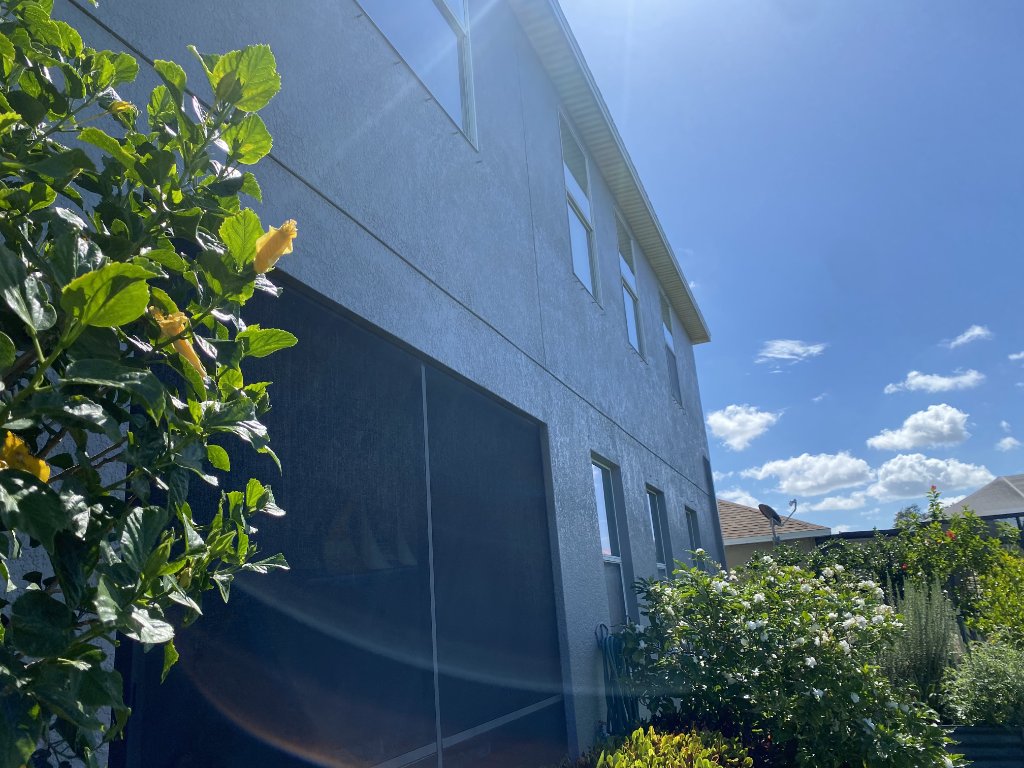
Discover why solar homes for sale in Florida are the ultimate investment in 2026. A Ruskin FL solar home with 40 paid-off panels can deliver a very low monthly electric bill and massive long-term savings.
If you're house hunting in Florida in 2026, solar homes should be at the top of your list. With electricity rates climbing and Florida's abundant sunshine making it the solar capital of the East Coast, a home with paid-off solar panels is one of the smartest financial decisions you can make. A solar home in Hillsborough County — particularly in the Ruskin area — combines the best of both worlds: affordable housing and dramatically reduced energy costs. Here's why a solar-powered home is the smartest buy in Florida in 2026.
## The Economics of Solar in Florida
Florida isn't called the Sunshine State for nothing. With an average of 237 sunny days per year, Florida has the solar potential to generate significant electricity for any home with properly installed panels. Here's what that means in dollars:
**A Typical Florida Home's Electric Bill:** A 3,200-square-foot home in Florida with a large family — multiple air conditioners running, a pool pump, electric water heater, and the usual appliances — can easily see electric bills of $300-$500 per month in the summer. Over a year, that's $3,600-$6,000 just for electricity.
**With Paid-Off Solar:** A home with a properly sized solar system that's fully paid off keeps your electric bill very low most months — there's always a base connection fee (typically $15-$30 per month) to stay tied to the grid, but beyond that small charge, your monthly cost is minimal. That's a savings of $3,200-$5,600 per year, every year, for the life of the system (25+ years).
**The Math Over 25 Years:** Over the 25-year expected life of a solar system, that's $80,000-$140,000 in electricity savings. When you buy a home with solar panels already paid off, you're buying decades of very low electric bills — never quite zero, since the utility connection fee always applies, but dramatically cheaper than a non-solar home. That's why a solar home isn't just a nice feature — it's a financial asset.
## Why Paid-Off Solar Matters
There's a critical distinction every buyer needs to understand: paid-off solar vs. leased or financed solar.
**Paid-Off Solar:** The panels are owned outright by the homeowner. There's no monthly loan payment, no lease, and no transfer issues. When you buy the home, you buy the system — and all the savings that come with it. This is the ideal scenario.
**Leased Solar:** The panels are owned by a solar company, and the homeowner pays a monthly lease. These leases can be difficult to transfer to a new buyer, and they come with ongoing monthly costs that eat into the savings. Many buyers and lenders are hesitant about leased systems.
**Financed Solar:** The panels were purchased with a loan that's still being paid off. The loan may or may not be assumable by the new buyer. If it's not assumable, the seller has to pay it off at closing, which can complicate the transaction.
When you're looking at solar homes for sale in Florida, always ask: "Are the panels owned outright?" A home with 40 paid-off solar panels is worth significantly more than the same home with a leased system. The paid-off panels are an asset that transfers with the property. A lease is a liability.
## The Ruskin Advantage: Solar in South Hillsborough County
Hillsborough County, and specifically the South Shore area around Ruskin, is an ideal location for solar homes for several reasons:
**Newer Construction:** Many homes in South Shore communities like Mira Lago were built in the 2010s, which means they have modern construction, energy-efficient building envelopes, and roofs that are in good condition — all of which are prerequisites for a quality solar installation.
**Large Roof Areas:** A 5 bedroom home with 3,200+ square feet typically has a large, south-facing roof area that's perfect for solar panels. More roof area means more panels, which means more electricity generation.
**No State Income Tax + Low Property Taxes:** Florida's tax structure makes owning a home here more affordable than in many states, and when you add solar savings on top, the financial picture gets even better.
**Net Metering:** Florida utilities offer net metering, which means that when your solar panels generate more electricity than your home uses (like during the day when the family is at work and school), the excess is fed back to the grid and you get a credit. At night, when the panels aren't generating, you draw power from the grid and use those credits. This means you're effectively using the grid as a battery — no expensive battery storage required.
## What to Look for in a Solar Home
If you're shopping for a solar home in Florida, here's what to check:
### System Size
The system needs to be appropriately sized for the home. A 3,200-square-foot home with a large family will use more electricity than a 1,500-square-foot home with two people. Look for a system with enough panels to cover your expected usage. A system with 30-40 panels is typically sufficient for a large family home in Florida.
### System Age and Warranty
Solar panels degrade slightly over time — typically about 0.5% per year. A system that's 5-10 years old will still be producing at 90-95% of its original capacity. Most panels come with 25-year performance warranties. Ask for the installation date and warranty documentation.
### Inverter Type
The inverter converts the DC power from the panels to AC power for your home. String inverters are common and reliable. Microinverters (one per panel) offer better performance when some panels are shaded. Ask what type of inverter the system uses and its warranty status.
### Utility Connection
Understand your utility company's net metering policy and the base connection fee. Even with solar, you'll pay a monthly connection fee to stay connected to the grid. This is typically $15-$30 per month — a small price for the security of grid power when your panels aren't generating.
### Roof Condition
Solar panels are typically mounted on the roof, and removing them to replace a roof is expensive. If the roof is old, factor in the cost of a roof replacement (with panel removal and reinstallation) into your purchase decision. A newer roof (10 years old or less) is ideal.
## The Environmental Bonus
While the financial case for solar is strong on its own, there's also the environmental benefit. A solar-powered home in Florida reduces carbon emissions by several tons per year compared to a grid-powered home. For families who care about their environmental footprint, this is a meaningful way to reduce impact without changing their lifestyle.
## Solar Homes and Resale Value
Solar homes sell for more than comparable non-solar homes. Studies have shown that homes with owned solar systems sell for 3-4% more than similar homes without solar. For a $500,000 home, that's $15,000-$20,000 in additional value — and that's before factoring in the ongoing electricity savings.
More importantly, solar homes sell faster. As energy costs rise and buyers become more energy-conscious, a home with paid-off solar panels is an increasingly attractive listing. In a market where buyers have choices, solar is a differentiator.
## The Bottom Line
A solar home in Hillsborough County is the smartest buy in Florida in 2026 because it combines three powerful advantages: affordable housing prices (especially in South Shore communities like Ruskin), decades of very low electric bills, and strong resale value. When you find a 5 bedroom home with 40 paid-off solar panels, you're not just buying a house — you're buying a financial asset that will save your family tens of thousands of dollars over the years you own it.
In a state where air conditioning runs nearly year-round and electricity rates continue to climb, paid-off solar isn't a luxury. It's one of the smartest financial decisions a Florida homebuyer can make.